Paint Protection Film (PPF) has become one of the most popular solutions for protecting vehicle paint from stone chips, scratches, road debris, and environmental damage. Modern premium PPF products use advanced thermoplastic polyurethane (TPU), self-healing technology, and high-performance adhesives to provide long-term protection while maintaining the original appearance of a vehicle.
However, many vehicle owners and even some installers overlook one hidden threat: metal contamination and corrosion on paint protection film.
Tiny metal particles from brake dust, industrial pollution, railway dust, and road debris can attach to the surface of PPF. Over time, these particles may oxidize and create rust-colored spots, dark stains, rough textures, and even permanent surface damage.
What Is Metal Contamination on PPF?
Metal contamination refers to microscopic metal particles that become attached to the surface of paint protection film.
These particles commonly come from:
- Brake pad and brake rotor wear
- Industrial areas and factories
- Railway dust
- Construction zones
- Road grinding materials
- Vehicle transportation environments
During normal driving, thousands of microscopic particles can become airborne. Because PPF has a protective coating and surface structure, these contaminants can stick to the film.
How Does Metal Corrosion Happen on PPF?
1. Metal Particles Attach to the Film Surface
The first stage begins when small metal particles land on the PPF surface. Common sources include brake dust and road debris.
These particles may become trapped in:
- The top coating layer
- Surface imperfections
- Environmental deposits
2. Oxidation Process Begins
Metal corrosion occurs when iron particles react with oxygen and moisture. The basic reaction is:
Iron + Oxygen + Water → Iron Oxides (Rust)
The resulting iron oxides create visible contamination such as:
- Orange rust-colored spots
- Brown stains
- Black oxidation marks
3. Corrosion Products Affect the PPF Surface
As metal particles oxidize, the corrosion products expand and may create pressure on the film surface. Possible effects include:
- Small raised particles
- Rough texture
- Reduced gloss
- Loss of optical clarity
What Does Metal Corrosion Look Like on PPF?
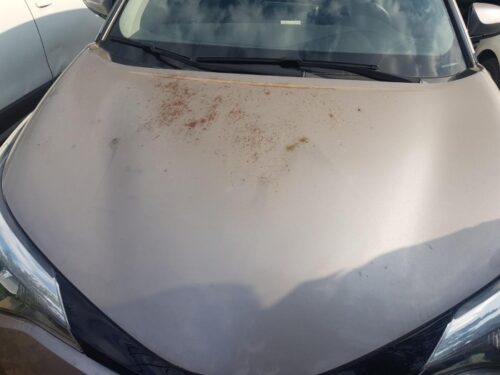
1. Orange or Rust-Colored Spots
The most common appearance is small orange or brown dots. They often look like rust freckles on the film surface.
- Front bumper
- Vehicle hood
- Side mirrors
- Lower doors
- Rear quarter panels
Light-colored vehicles such as white and silver cars usually show these spots more clearly.
2. Black or Dark Oxidation Spots
Some metal contaminants create black or gray spots instead of orange rust. These marks may appear as if dirt is trapped inside the film.
3. Yellow or Brown Discoloration
Long-term contamination may create yellowish or brown shadows around metal particles. This can reduce the transparency and visual clarity of the PPF.
4. Rough Surface Texture
Healthy PPF should feel smooth and clean. Metal contamination can create:
- Sandpaper-like texture
- Tiny bumps
- Embedded particles
5. Permanent Marks and Micro Damage
If metal contamination remains untreated for a long time, corrosion may cause:
- Micro pits
- Permanent stains
- Reduced gloss
- Surface imperfections
Why Is Metal Corrosion More Common Today?
High Performance Vehicles
Modern vehicles often use larger brake systems and high-performance brake pads, which generate more brake dust and iron particles.
Urban Driving Environment
Vehicles driven in cities, construction areas, and industrial zones are exposed to higher levels of airborne contamination.
Coastal and Winter Conditions
Salt, humidity, and marine environments accelerate metal oxidation and corrosion.
How to Remove Metal Contamination From PPF
1. Iron Fallout Remover
Professional detailers commonly use iron-removing chemicals to dissolve embedded metal particles.
- Wash the vehicle
- Apply iron remover
- Allow chemical reaction
- Rinse thoroughly
- Inspect the surface
2. Clay Bar Treatment
A clay bar can remove bonded contamination, but it should be used carefully on PPF to avoid unnecessary friction.
3. Regular Maintenance
Preventing contamination buildup is easier than repairing damage.
- Wash the vehicle regularly
- Remove brake dust buildup
- Use PPF-safe cleaning products
- Avoid leaving contaminants for long periods
How Premium PPF Helps Prevent Metal Contamination
Hydrophobic Top Coating
A hydrophobic surface helps repel water, reduce contamination adhesion, and improve cleaning performance.
Smooth Surface Technology
A smoother PPF surface provides fewer areas for metal particles to attach.
Chemical Resistance
High-quality PPF should resist:
- Acid rain
- Road chemicals
- Salt exposure
- Environmental contamination
How Installers Can Educate Customers
Professional installers should explain that PPF is a protective system, not a maintenance-free product.
PPF protects your paint from damage, but environmental contaminants such as brake dust and iron particles can still attach to the film surface. Regular maintenance keeps the film clear, glossy, and performing at its best.
Frequently Asked Questions
Can iron fallout damage paint protection film?
Yes. Iron particles can oxidize on PPF and create visible stains, roughness, and long-term surface contamination if not removed.
Can rust spots on PPF be removed?
Most fresh iron contamination can be removed with professional iron fallout treatment. Older contamination may require additional correction.
How often should PPF be cleaned?
Regular washing and periodic decontamination help maintain the clarity and performance of paint protection film.
Conclusion
Metal corrosion and iron contamination are hidden challenges for vehicles protected with paint protection film. Small metal particles from brake dust, industrial pollution, and road debris can oxidize over time, creating rust-colored spots, dark stains, rough textures, and possible permanent damage.
Choosing high-quality PPF with advanced TPU technology and protective top coating can significantly improve resistance against environmental contamination.
With proper maintenance, premium paint protection film can continue protecting vehicles while maintaining a clean, glossy, and factory-new appearance for years.

https://shorturl.fm/ZNJ2N
?