
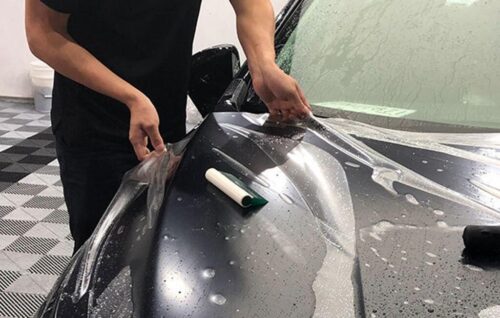
As the paint protection film (PPF) industry continues to evolve, material technology is constantly improving. From traditional PVC films to today’s advanced TPU paint protection films, manufacturers are always looking for better solutions to provide longer-lasting vehicle protection.
Recently, a new material term has gained attention in the premium PPF market: PCU. But what exactly is PCU? Is it a completely new material that replaces TPU? And is PCU truly better than traditional TPU paint protection film?
What Is PCU Paint Protection Film?
PCU usually refers to Polycarbonate-based Urethane, a modified polyurethane material designed to improve certain performance characteristics of traditional polyurethane films.
Strictly speaking, PCU is not completely separate from TPU technology. Instead, it represents an advanced polyurethane material direction that focuses on improving durability, optical clarity, and long-term environmental resistance.
Most premium paint protection films today still use high-quality Aliphatic TPU as the main base material. PCU technology is considered an additional material upgrade aimed at achieving higher performance levels.
Why Is TPU Still the Main Material for Premium PPF?
TPU (Thermoplastic Polyurethane) remains the most widely used material for high-quality paint protection films worldwide.
1. Excellent Flexibility and Stretchability
Modern vehicles have complex body curves, including bumpers, mirrors, doors, and hood edges. High-quality TPU films provide excellent flexibility, allowing installers to stretch and conform the film smoothly without creating unnecessary stress marks.
2. Self-Healing Performance
Many premium TPU paint protection films feature advanced top coatings that allow minor scratches to disappear when exposed to heat.
Common heat sources include:
- Direct sunlight
- Warm water
- Heat gun treatment during installation
3. High Optical Clarity
High-grade aliphatic TPU provides excellent transparency, allowing the original vehicle paint color and gloss to remain visible while adding a protective layer.
What Are the Advantages of PCU Compared With TPU?
If properly manufactured, polycarbonate-based polyurethane materials can offer several potential advantages over conventional polyurethane systems.
1. Improved Yellowing Resistance
One of the biggest concerns with paint protection film is long-term yellowing caused by:
- UV exposure
- Heat
- Oxidation
- Environmental pollution
PCU technology is designed to improve material stability, helping the film maintain better transparency over extended periods.
This can be especially valuable in high-UV regions such as California, Arizona, and Florida, where vehicles experience intense sunlight throughout the year.
2. Better Heat Stability
Vehicle surfaces can reach very high temperatures during summer conditions. Improved heat resistance helps maintain the stability of:
- The polyurethane structure
- The surface coating
- The overall appearance of the film
3. Enhanced Chemical Resistance
Vehicles are exposed to many environmental contaminants, including:
- Bird droppings
- Tree sap
- Road salt
- Car wash chemicals
- Automotive detailing products
Advanced polyurethane materials can provide improved resistance against these challenges.
Is PCU Always Better Than TPU?
The answer is: not necessarily.
The performance of a paint protection film depends on much more than the material name.
A premium PPF product requires a combination of:
- High-quality TPU or PCU base material
- Advanced adhesive technology
- Durable top coating
- Precise manufacturing process
Adhesive System
The adhesive layer directly affects:
- Installation performance
- Long-term bonding stability
- Clean removal
- Edge lifting resistance
Top Coating Technology
The coating determines important features such as:
- Gloss retention
- Self-healing ability
- Stain resistance
- Hydrophobic performance
Why Are More Brands Promoting PCU Technology?
The PPF market has become increasingly competitive. As TPU has become widely recognized by consumers, premium manufacturers are exploring new technologies to differentiate their products.
PCU has become one of the latest material concepts used to represent higher-performance paint protection solutions.
How Should Installers and Distributors Choose Between PCU and TPU?
For professional installers and distributors, the material name alone should not be the only deciding factor.
Important factors include:
- Material supplier reliability
- UV aging test results
- Weather resistance performance
- Adhesive quality
- Installation experience
- Real-world customer feedback
The Future of Paint Protection Film Materials
The future development of PPF technology will continue toward:
- Higher UV resistance
- Better self-healing coatings
- Improved optical clarity
- More durable polyurethane structures
- Advanced surface technologies
PCU represents an exciting direction in high-performance polyurethane technology. However, whether a film uses TPU or PCU, the ultimate goal remains the same:
Providing vehicles with longer-lasting, clearer, and more reliable paint protection.
For professional installers and vehicle owners, choosing a proven product from a reliable manufacturer is more important than simply choosing a material name.
