
Introduction
If you live or operate in coastal cities such as Los Angeles, Miami, Dubai, or Singapore, you may notice that vehicles tend to get dirty faster and require more frequent maintenance. This is mainly due to salt spray, high humidity, UV exposure, and airborne marine contaminants.
In these environments, Paint Protection Film (PPF) is constantly exposed to more aggressive environmental stress compared to inland regions. One often overlooked factor is the surface water behavior of the film—hydrophobic vs. hydrophilic performance.
So, which one performs better in coastal conditions?
1. Why Coastal Environments Are More Demanding for PPF
- 🌊 Salt particles from marine aerosols
- 💧 High humidity and frequent condensation cycles
- ☀️ Strong UV exposure combined with heat
- 🏖️ Sand, oil mist, and organic airborne residues
These factors can lead to:
- Surface contamination buildup
- Water spotting after evaporation
- Long-term staining or etching effects if not maintained properly
This is why surface interaction with water plays an important role in real-world performance.
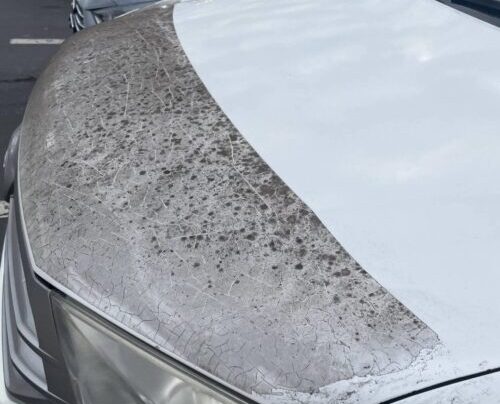
Coastal environment stress factors affecting PPF durability
2. What Is Hydrophobic PPF?
Hydrophobic PPF is designed to repel water from the surface. When water hits the film, it forms droplets and quickly rolls off.
Key Characteristics:
- Water forms beads (lotus effect)
- Fast water runoff and drying
- High gloss and clean visual appearance
- Easy rinsing during washing
Advantages in Coastal Cities:
- Reduces water spotting visibility
- Enhances self-cleaning effect during rain
- Maintains a premium glossy appearance
Limitation:
If the vehicle is not cleaned regularly, salt particles may remain on the surface after water evaporation, leading to localized residue buildup.
3. What Is Hydrophilic PPF?
Hydrophilic surfaces behave differently. Instead of forming droplets, water spreads evenly into a thin film across the surface.
Key Characteristics:
- Water spreads into a uniform sheet
- Slower runoff behavior
- More even surface washing effect
Advantages in Coastal Cities:
- Helps distribute salt and contaminants more evenly
- Reduces localized residue concentration
- More stable performance for low-maintenance users
Limitation:
- Less visible water-beading effect
- Slower drying appearance compared to hydrophobic surfaces
4. Hydrophobic vs. Hydrophilic: Which Is Better?
There is no absolute winner. The performance depends on usage habits, environment, and maintenance frequency.
Choose Hydrophobic PPF if:
- You wash your vehicle regularly
- You prefer a high-gloss, water-beading appearance
- The vehicle is stored indoors or in covered parking
Choose Hydrophilic PPF if:
- The vehicle is parked outdoors for long periods
- Maintenance frequency is low
- You operate in high-salinity coastal environments
5. Polymer Degradation Mechanisms (Scientific View)
PPF durability is affected by multiple environmental stress factors, not just water behavior.
This diagram shows the main degradation mechanisms:
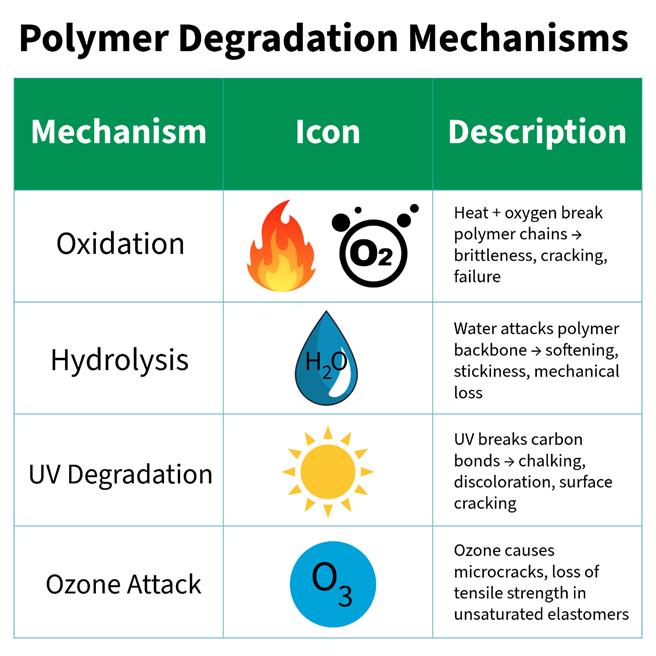
- Oxidation (heat + oxygen)
- Hydrolysis (moisture interaction)
- UV degradation (bond breaking)
- Ozone attack (microcracking)
This explains that PPF aging is a multi-factor environmental process.
6. Professional Insight
In real-world applications, both hydrophobic and hydrophilic PPF provide similar levels of paint protection. The key difference is not protection capability, but:
- Surface contamination behavior
- Water evaporation patterns
- Maintenance efficiency in different environments
Hydrophobic surfaces focus on visual cleanliness and ease of washing. Hydrophilic surfaces focus on uniform contamination distribution and environmental adaptability.
7. Important Note on Cleaning Chemicals
In coastal regions, vehicles are often cleaned more frequently using various cleaning agents.
Some highly alkaline or acidic cleaning products may accelerate surface wear if used improperly over time. It is recommended to use professional-grade neutral car wash products to maintain long-term film performance.
Conclusion
For coastal cities, the choice between hydrophobic and hydrophilic PPF should not be based on marketing claims alone, but on real-world usage conditions.
Understanding how water interacts with the film surface helps users select the most suitable solution for long-term durability, appearance, and maintenance efficiency.
Ultimately, both technologies serve the same purpose—protecting the paint—while offering different surface behaviors for different user needs.

I am a installer, I have to get more informations
OK,Please tell me more about it.
https://shorturl.fm/MwMo7
What?